Back to Community News
From July 25 to August 1, 2026, the United States-Japan Foundation convened the US–Japan Leadership Program’s annual summer conference in Palo Alto, California. For the first time in the Program’s history, its U.S. gathering took place outside Seattle, bringing the USJLP network to the heart of Silicon Valley.
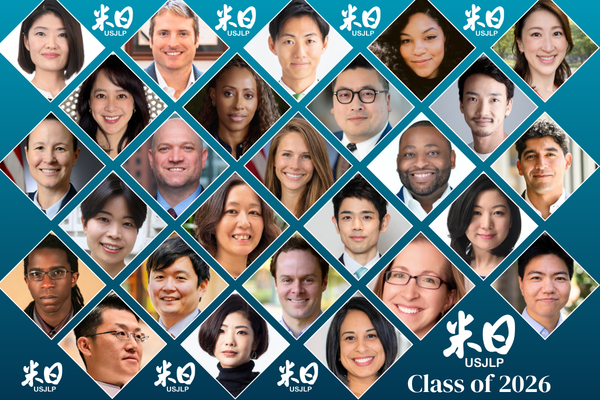
The Class of 2026 brought together 45 Delegates (23 Americans and 22 Japanese), including 26 incoming first-year Delegates and 19 returning second-years. Their backgrounds reflected the remarkable diversity of USJLP's leadership network: elected officials and policymakers, a NASA flight controller and an Air Force fighter pilot, AI entrepreneurs, journalists, scholars, artists, and social innovators. Spanning government, business, academia, the arts, and civil society, they brought distinctive perspectives and a shared commitment to strengthening understanding between Japan and the United States.
Midway through the week, 90 Fellows arrived from across Japan, the United States, and beyond, expanding the gathering into Fellows Weekend, USJLP's signature interclass homecoming. This report offers a day-by-day glimpse into the flow of the week, highlighting the conversations, experiences, and connections that defined USJLP 2026.
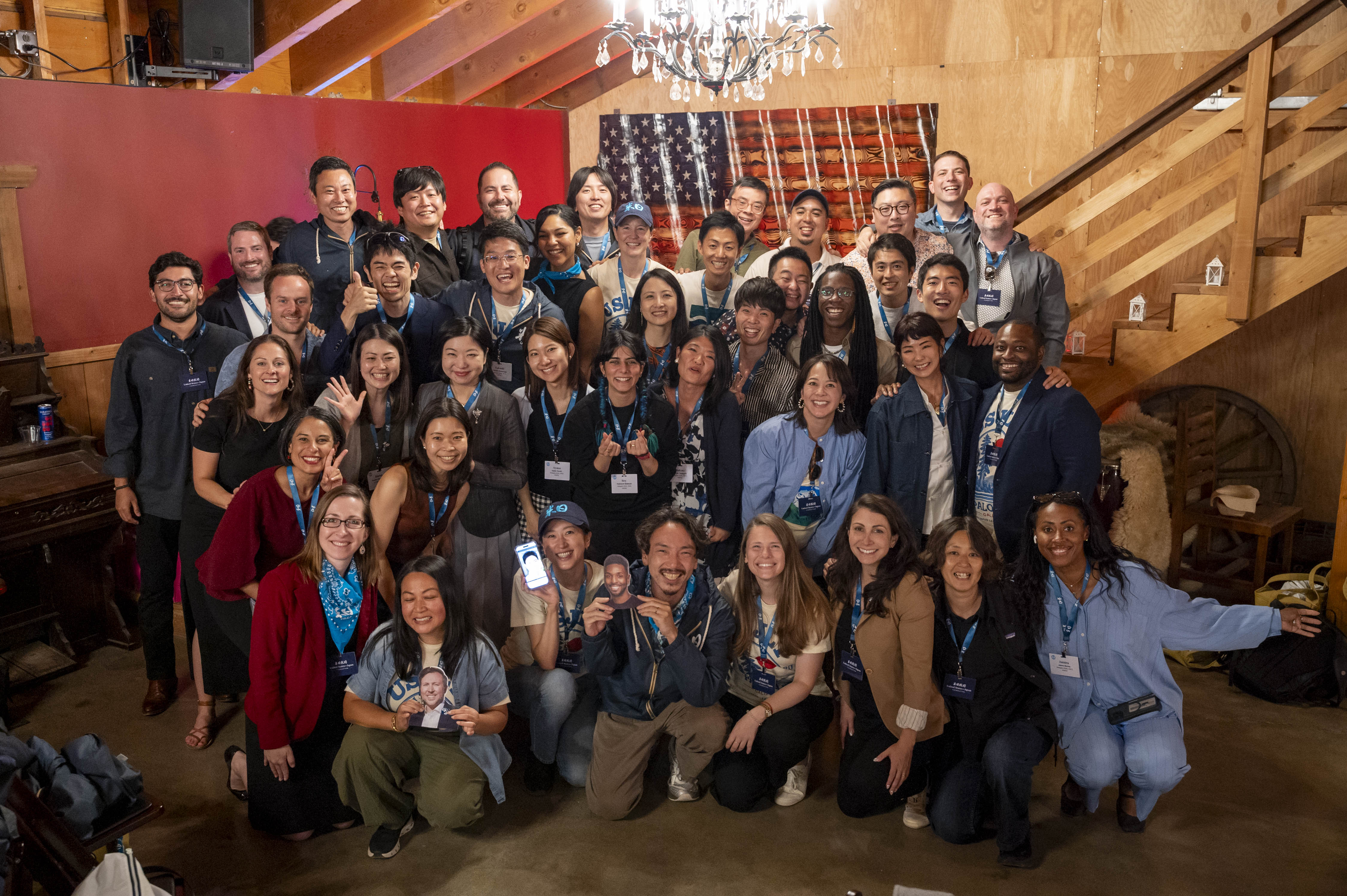
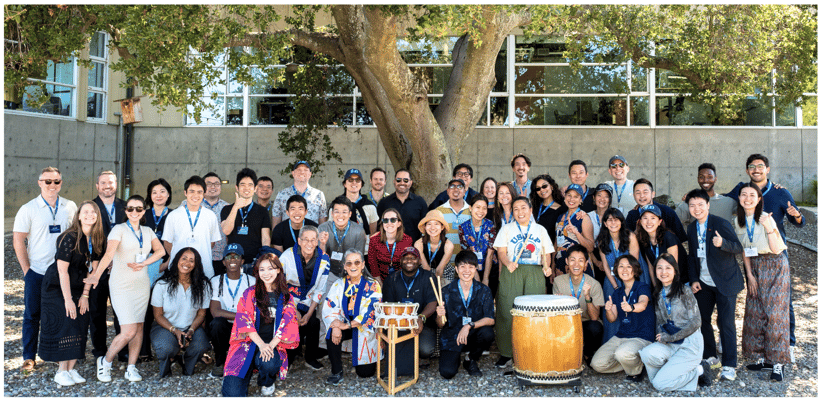 Above: Delegates pose for a commemorative photo with PJ and Roy Hirabayashi, founders of San Jose Taiko, following a memorable afternoon of music, movement, and connection at the Carnegie Endowment for International Peace on Monday, July 27.

Arrivals and Kick-Off: Saturday, July 25
The conference opened with a warm welcome from returning second-year sempai Delegates to their incoming first-year kohai classmates. A lively round of cross-national “Speed Meets” helped break the ice and spark new connections across both countries and class years.
The evening continued with a Welcome Dinner featuring remarks from the United States-Japan Foundation and brief self-introductions from each Delegate. Invited to share something about themselves not found in their professional biographies, Delegates began discovering surprising interests, personal stories, and unexpected connections.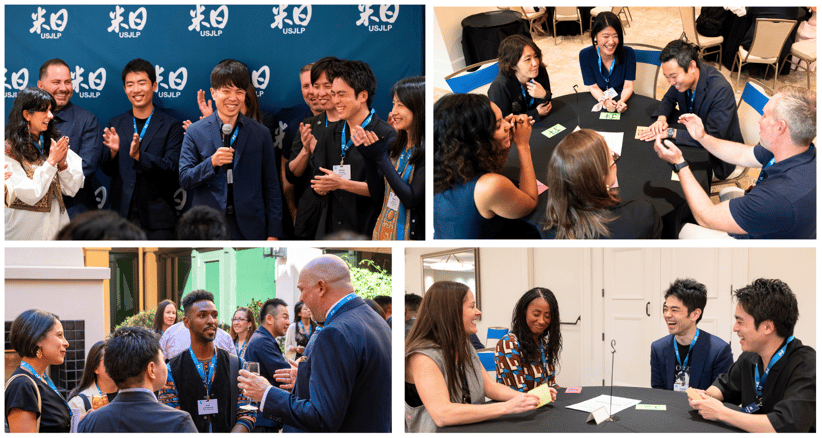
Day 2: Sunday, July 26
The first full day brought Delegates to the Carnegie Endowment for International Peace's offices in the Stanford foothills, made available through the generous support of Kenji Kushida (USJLP 2014–2015), senior fellow for Japan studies in Carnegie's Asia Program. Kenji and his colleagues’ warm hospitality helped make Carnegie an ideal retreat for the week. Surrounded by nature, with deer and wild turkeys wandering the grounds, the setting felt both removed from the everyday and inviting to the open conversations, creative thinking, and personal connections that defined the Delegate experience.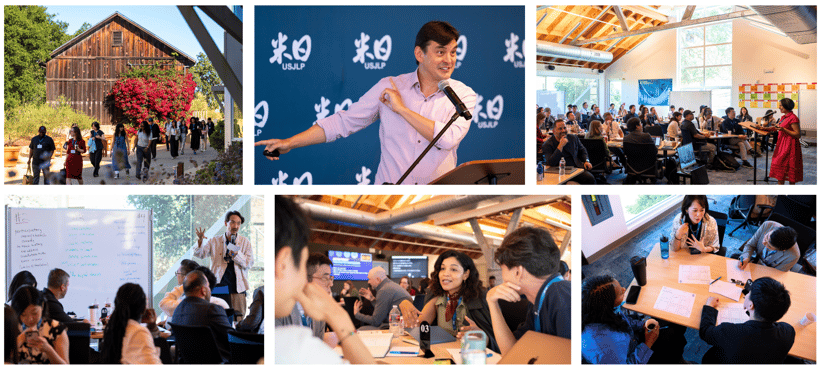
The day's programming encouraged Delegates to look beyond professional identities and familiar assumptions, exploring both the challenges shaping their respective countries and the personal experiences that connect them:
🔹Japan Today and America Today — Two complementary sessions invited Delegates to share candid perspectives on the challenges reshaping their respective societies, from demographic change and defense readiness in Japan to political polarization, regional identities, and social divides in the United States. Small-group exchanges encouraged participants to challenge assumptions and explore where their countries' experiences echoed or diverged.
🔹Spotlight Talks on Identity and Belonging — Four Delegates shared personal reflections on identity, belonging, and formative experiences that shape how they lead and connect with others.
🔹共通点 (Points of Connection) Workshop — Small groups exchanged personal interests and cultural touchstones, uncovering unexpected common ground and imagining creative collaborations—a reminder that trust can begin with something as simple as a shared favorite book or hobby.
The day concluded with a golden-hour dinner at The Club at Westpoint overlooking San Francisco Bay, trading the quiet Stanford foothills for open water and relaxed conversation. 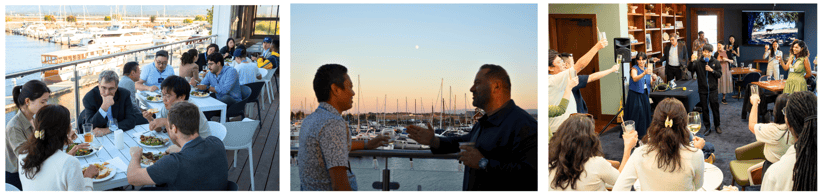
Day 3: Monday, July 27
Monday's discussions explored how societies build shared understanding, cultural identity, and social cohesion in a rapidly changing world:
🔹 Media, Populism, and Democratic Trust — A binational panel examined how fragmented information environments and declining institutional trust are reshaping democratic societies, followed by small-group reflections on rebuilding shared understanding.
🔹 Culture as a Strategic Asset — Bringing together perspectives from contemporary art, film, manga, and cross-cultural storytelling, Delegates explored how culture creates shared meaning, bridges differences, and generates lasting social and economic value.
🔹 Delegate Spotlight Talks — Personal reflections explored the relationship between language, movement, cultural identity, and the unexpected encounters that shape creative expression. 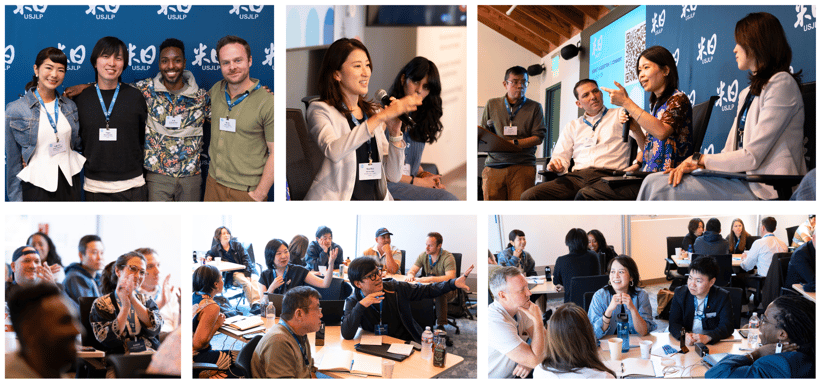
The afternoon brought these themes to life through a special experience with San Jose Taiko founders PJ and Roy Hirabayashi, made possible through an introduction by RADWIMPS drummer Satoshi Yamaguchi (USJLP 2025–2026). Their connection had a remarkable history: while researching at Stanford in 2023, Satoshi discovered San Jose Taiko's oral drumming traditions, helping inspire the development of a voice-controlled bass drum interface that enabled him to perform again after musician's dystonia forced him to step away from his drumming career.
After viewing the documentary Because of You I Am, chronicling the Hirabayashis' 50-year journey using Japanese American drumming traditions to build community and inspire social change, Delegates joined them for a conversation and interactive taiko dance workshop. The hands-on workshop became as much a team-building experience as a lesson in movement and music. Each Delegate developed a personal dance move inspired by their own story before the group learned Ei Ja Nai Ka, a collaborative call-and-response song that would make an unexpected return later in the week.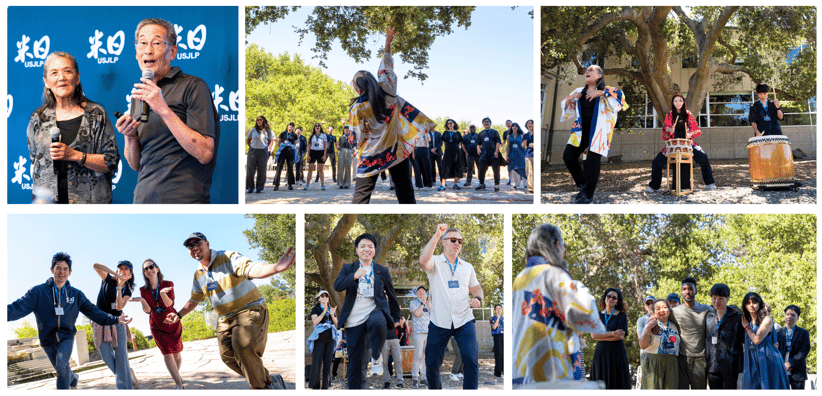
The day also included optional Delegate-led workshops on art appreciation and communication confidence before concluding with a family-style omakase dinner at Kemuri Japanese Barú, featuring the restaurant's inventive, smoke-infused Japanese cuisine—another special experience made possible through an introduction from Satoshi Yamaguchi.
Day 4: Tuesday, July 28
Tuesday’s programming explored questions of pressure, memory, and change, as Delegates examined the challenges facing the U.S.–Japan alliance and the broader forces reshaping economies, institutions, and society.
🔹 Alliance Under Pressure — A binational panel examined the U.S.–Japan alliance's ability to deter threats and make decisions under pressure, followed by an interactive crisis simulation in which Delegates compared approaches to navigating strategic challenges.
🔹 What We Choose to Remember — Three personal spotlight talks explored the lasting impact of war, disaster, and contested history, reflecting on how societies preserve difficult memories and what remains long after the headlines fade.
🔹 The New Economic Playbook — With the U.S. and Japan rethinking the balance between free markets and government intervention, Delegates examined how industrial policy, technological competition, and economic security are rewriting the rules of the global economy.
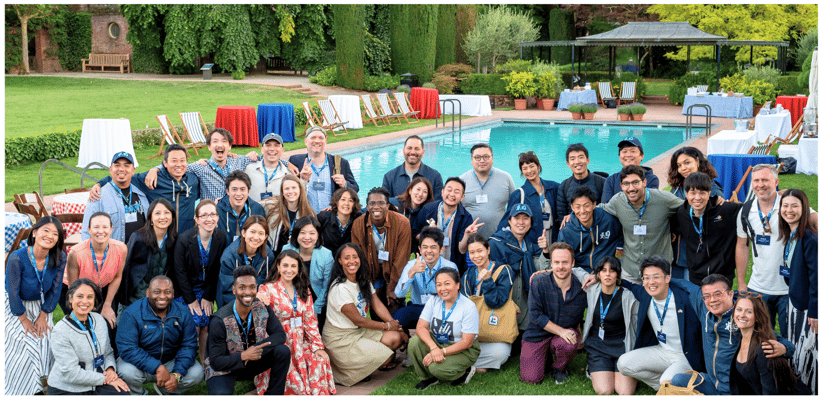
🔹 AI, Work, and Human Agency — Delegates explored how AI is reshaping work, power, and opportunity, including who stands to benefit, who risks being left behind, and how leaders can preserve human agency and social trust amid rapid technological change. 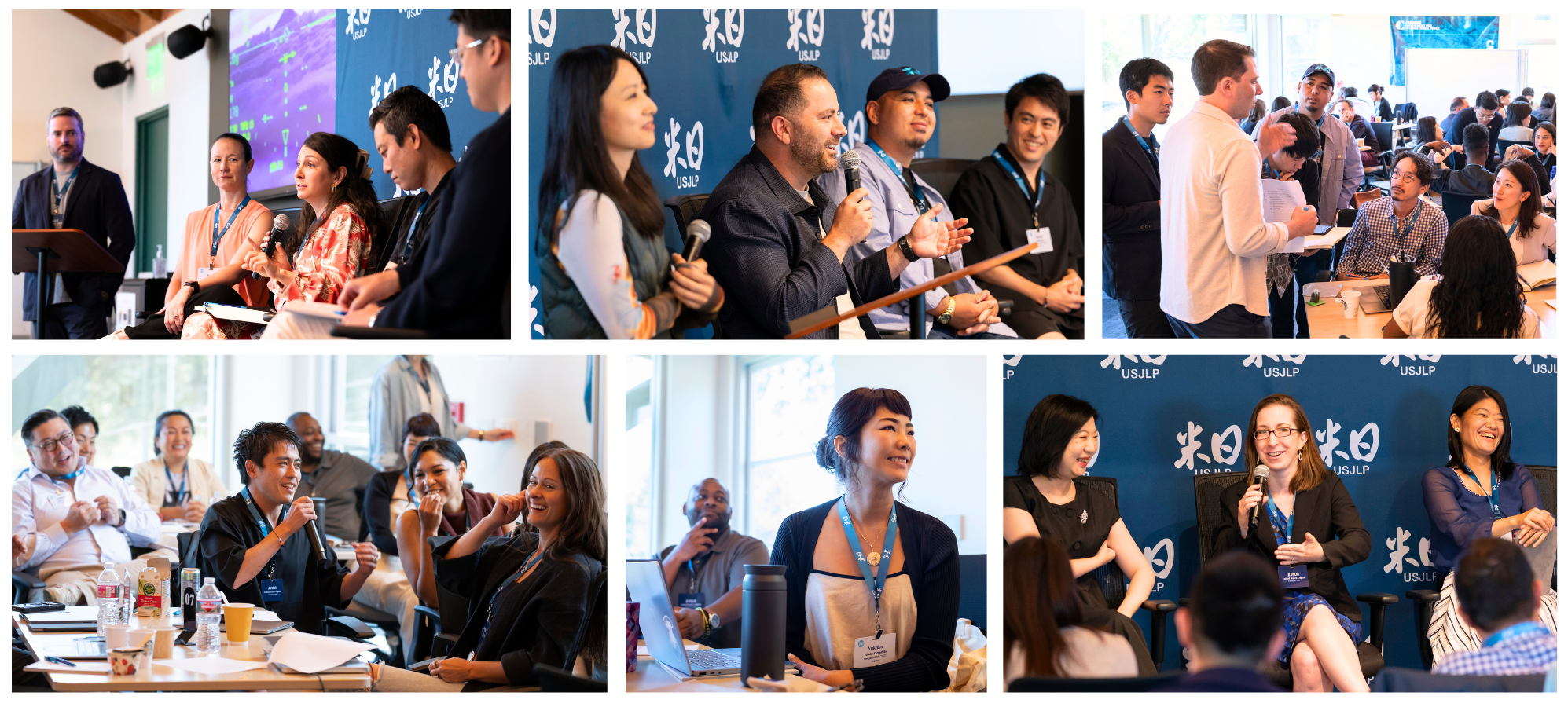 The evening brought Delegates to Filoli Historic Estate and Gardens, a National Trust historic site nestled against the Santa Cruz Mountains, for a private summer gathering on the Pool Lawn. With the historic pool and gardens open exclusively to the group, the evening invited Delegates to slow down, explore the grounds, and enjoy unhurried conversation in a beautiful setting.
Day 5: Wednesday, July 29
The final Delegate-only day turned the lens toward leadership itself, exploring how individuals, teams, and organizations adapt to change—and how leaders can help shape what comes next.
🔹 The Art of Adaptive Leadership — Six Delegate spotlight talks explored what helps leaders adapt as circumstances shift, from the tension between consensus and speed to the quieter question of who a leader is becoming, not just who they already are.
🔹 How Change Is Built — Drawing on experiences in local government, education, philanthropy, and nonprofit leadership, Delegates examined what happens when people's evolving needs outpace the institutions designed to serve them.
🔹 Is Our Future in Good Hands? — Brief perspectives on policy and technology gave way to an interactive exercise imagining what might change when more people have the tools to build solutions, rather than simply identify problems. 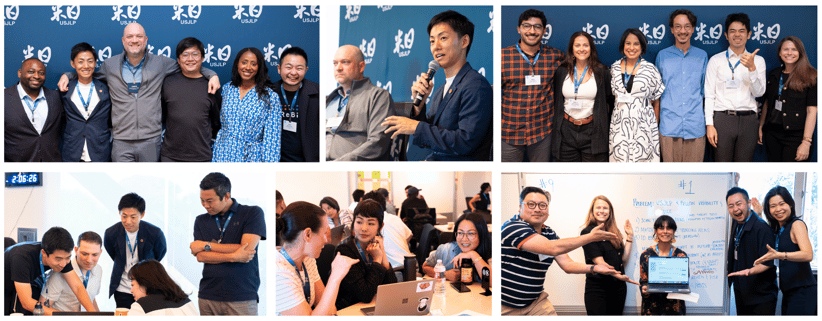 The afternoon concluded with a reflection session beneath a large oak tree at Carnegie. Guided by returning second-year Delegates, the class shared perspectives on the experiences, relationships, and lessons that had shaped their time together, bringing a meaningful close to the Delegate-only portion of the week.
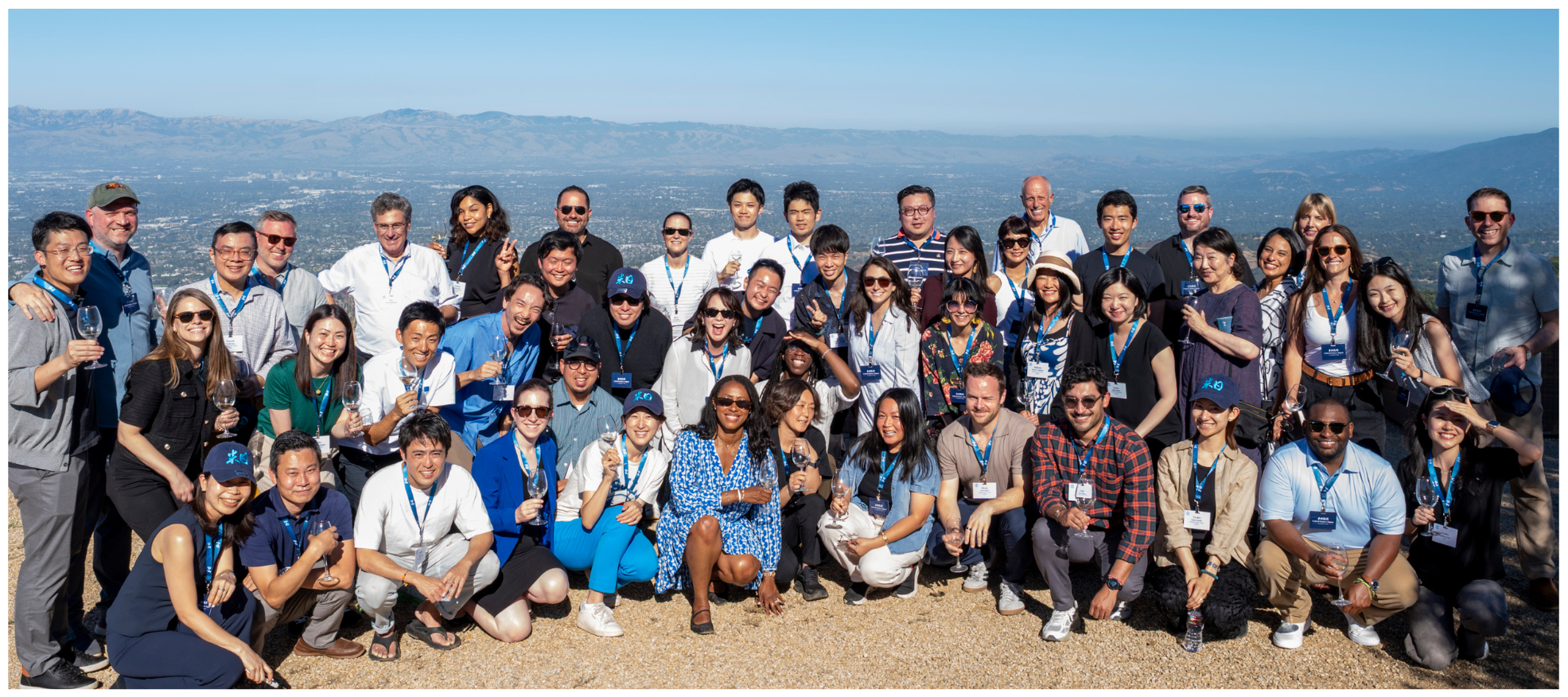
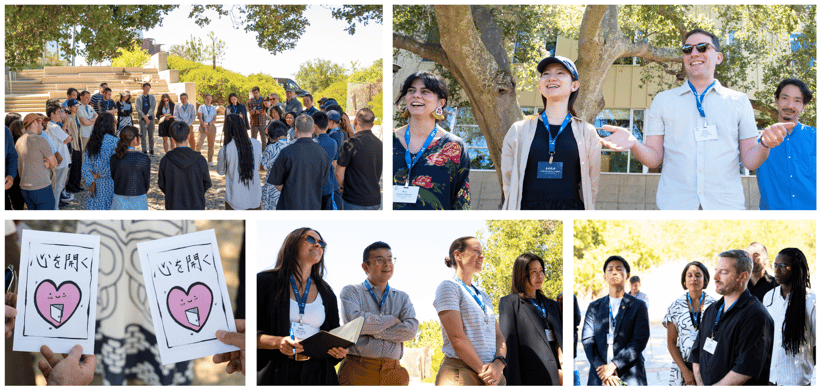 That evening, the group traveled into the Santa Cruz Mountains for a private tour, tasting, and dinner at Ridge Vineyards' historic Monte Bello Estate, overlooking Silicon Valley at dusk. With a winemaking history dating to the 1880s and Japanese ownership since 1986, Ridge offered another fitting U.S.–Japan connection to the week's experiences. The memorable mountaintop gathering gave Delegates a chance to reflect on their shared journey and enjoy one final evening together before welcoming Fellows for the weekend ahead.
Day 6: Thursday, July 30
The final two days of the conference brought the wider USJLP community together for Fellows Weekend, the Program's annual interclass reunion. A total of 90 Fellows joined the current Delegate class, bringing together members whose participation in the Program spans more than two decades. Following a welcome from the United States-Japan Foundation and Fellows Advisory Council, the day's sessions encouraged personal storytelling, fresh perspectives, and collaboration across the network:
🔹 Stories That Shaped Us — Delegates and Fellows shared personal stories about formative experiences, turning points, and difficult lessons, creating space to go deeper than ordinary small talk and connect beyond professional identities.
🔹 USJF Today — Foundation leadership shared recent initiatives to strengthen U.S.–Japan relations through grantmaking, leadership development, and the exchange of ideas, inviting Fellows to explore opportunities for engagement and collaboration.
🔹 Silicon Valley as a Cultural Force — A joint panel of Fellows and Delegates examined the ideas about speed, scale, disruption, and progress that Silicon Valley is quietly exporting to the world, and who has the power to shape or challenge their influence.
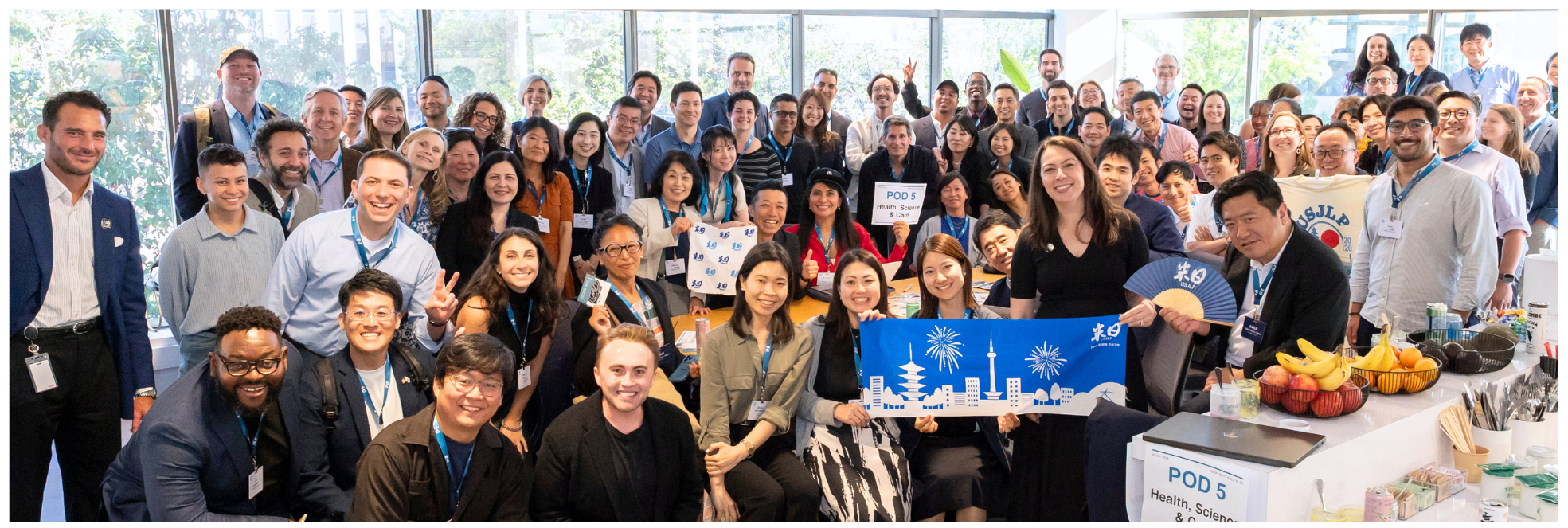
🔹 Delegate-hosted Thematic Table Talks — Fellows joined Delegates for small-group conversations on topics ranging from AI and education to social trust, leadership, caregiving, and the future of U.S.–Japan relations. 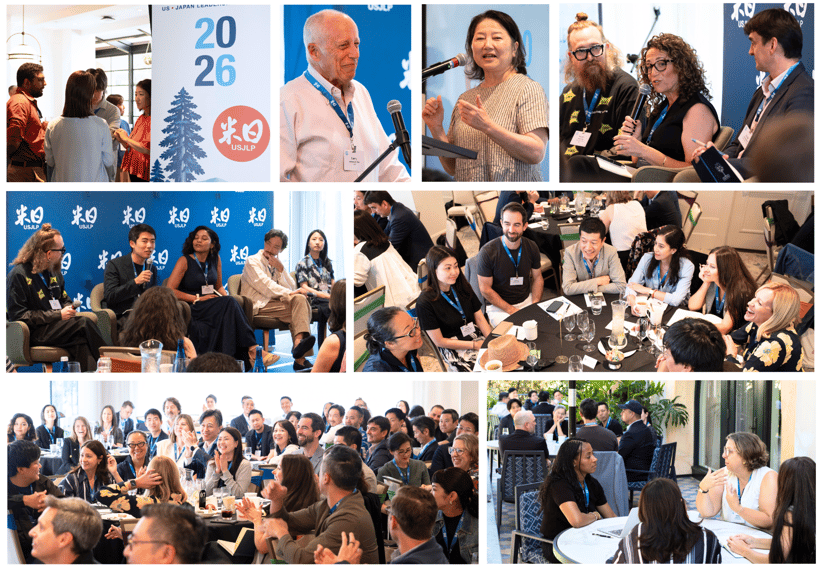 During the afternoon break, some 80 attendees enjoyed an optional site visit to Perplexity AI's Palo Alto offices, made possible through the generous support of Alison Grigonis (USJLP 2018–2019) and her colleagues. The visit featured insights from senior leadership and hands-on workshops using Perplexity's Computer platform to develop solutions to challenges identified by each group.
 The evening brought the community to the Computer History Museum in Mountain View for the Fellows Weekend Opening Reception. With the museum's galleries open exclusively to USJLP, the evening moved from cocktails among the exhibits into dinner and a spirited series of performances.
San Jose Taiko founders PJ and Roy Hirabayashi opened the performances, followed by a solo set from drummer Satoshi Yamaguchi (USJLP 2025–2026). Satoshi had brought VXD, his voice-controlled bass drum prototype, all the way from Japan especially for the occasion. His performance alongside PJ and Roy marked a special full-circle moment, reuniting him with the musicians whose approach to taiko had helped inspire the device's creation. As the crowd drew closer, fellow Delegate Cameron McKinney (USJLP 2026–2027), founder of contemporary dance company Kizuna Dance, joined Satoshi for several songs with expressive dance that lifted the room's energy to another level. The night culminated with PJ, Roy, and Satoshi coming together with the Delegates to perform Ei Ja Nai Ka, the collaborative call-and-response song they had learned during Monday's taiko workshop, bringing a memorable shared experience to the wider Fellows community. 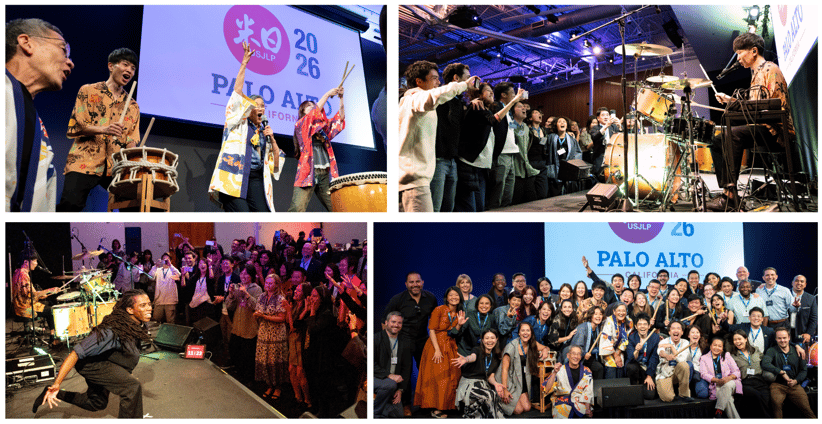
Day 7: Friday, July 31
The final full day brought Delegates and Fellows to the Stanford Faculty Club, made possible through the generous support of Kiyoteru Tsutsui (USJLP 2006–2007) and the Walter H. Shorenstein Asia-Pacific Research Center. The day's programming offered a mix of timely insights, candid exchange, and reflection on the future of U.S.–Japan relations:
🔹 Member Lightning Talks — Six rapid-fire talks explored the choices and assumptions shaping fields ranging from artificial intelligence and infrastructure to institutional innovation, corporate governance, and criminal justice.
🔹 Bring It to the Table — An open-ended exchange invited mixed groups of Delegates and Fellows to raise ideas, challenges, and unresolved questions and draw on the collective wisdom of the USJLP network.
🔹 The Future of U.S.–Japan Partnership: What Can No Longer Be Assumed? — The conference's substantive capstone brought together perspectives from diplomacy, security, politics, and governance to examine what has sustained the bilateral relationship through decades of change and what can no longer be taken for granted. Small-group discussions extended the conversation with a provocative question: What are we reluctant to ask out loud about the future of U.S.–Japan trust and partnership?
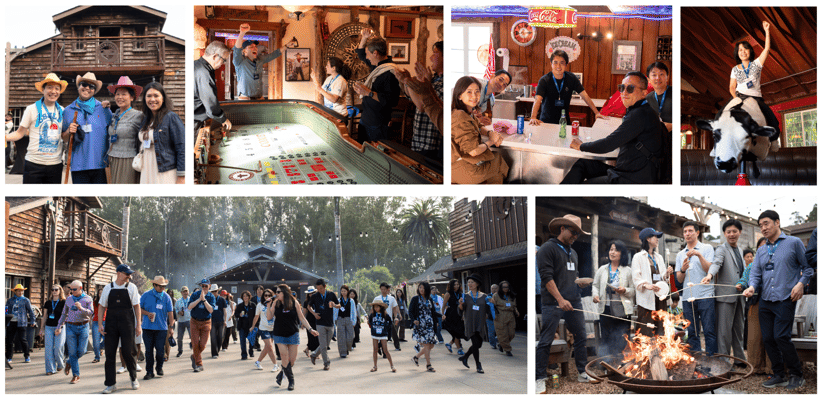
Over lunch, Fellows and next-generation USJLP family members hosted thematic table conversations across a wide range of interests, alongside recognition of Fellows celebrating milestone reunion years. 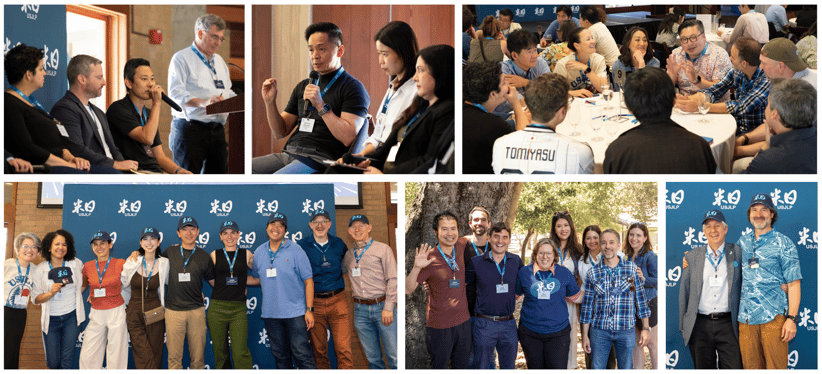 The afternoon carried the community into the hills above Half Moon Bay for an American Old West-inspired closing celebration at Long Branch Saloon and Farms. From mechanical bull riding and casino games to a hilltop hike with sweeping ocean views, members explored the living museum's many attractions before coming together for line dancing, pit-fired barbecue, and an evening of fun and camaraderie.
The festivities culminated in a Delegate-to-Fellow graduation ceremony, formally welcoming second-year Delegates into their lifelong roles as Fellows of the USJLP network. The week then closed with a special performance led by singer-songwriter Tiffany Thompson (USJLP 2025–2026), who helped conceive and debut an original USJLP community song at the 2025 Kyoto conference, inspired by stories shared among members. Envisioned as a living anthem to be carried forward by future classes, the song returned in Palo Alto with a new verse created by the Class of 2026, who joined together to sing it in a fitting celebration of the Program's enduring connections and evolving traditions.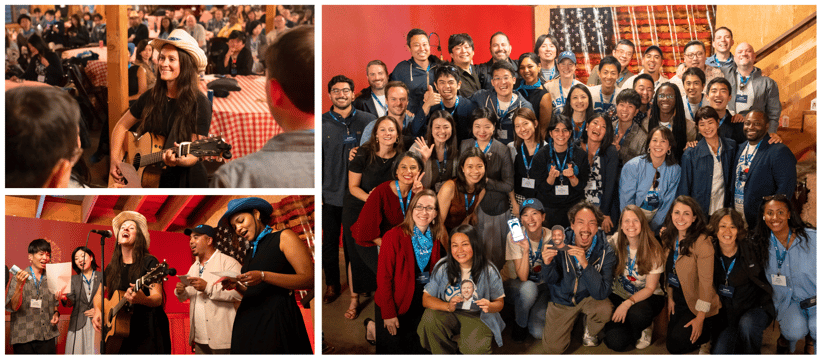
Reflecting Forward
What Delegates and Fellows carried home from Palo Alto was more than a week of substantive discussions and shared experiences. It was a set of relationships built and strengthened through candid conversations, a willingness to engage with difficult questions, and a commitment to understanding perspectives beyond their own. The Class of 2026 added its own distinctive chapter to USJLP's story, while returning Fellows embodied the trust, generosity of spirit, and commitment to one another that have sustained this community for more than 25 years.
The week was made all the more memorable by Fellows who opened doors, shared their connections, and helped create special opportunities for the wider USJLP community. We were especially pleased to have two United States-Japan Foundation Trustees—Chairman Lawrence K. Fish and Finance Committee Chair Keiko Tashiro—join us throughout the week and share in the experience.
Now over 560 members strong, the USJLP network continues its tradition of building bridges of trust and collaboration across the Pacific. The community will reunite next summer in Kyoto, Japan, July 18–25, 2027, carrying that spirit into its next chapter.
 Delegate Voices: USJLP Palo Alto 2026
 “USJLP is a transformative space where global leadership meets grassroots humanity. It challenges us to look beyond rigid institutional silos and recognize that in both the U.S. and Japan, our greatest strength lies in building intergenerational bridges and supporting local communities. The relationships forged here are not just professional networks; they are lifelong partnerships built on trust, empathy, and a shared vision for societal care.”
– Moses Dixon (USJLP 2026–2027), President & CEO, Senior Connection, Inc; United Nations Representative to the AWWG at the UN Economic and Social Council (ECOSOC), United Nations

“USJLP provided a rare and valuable opportunity to connect openly and honestly with people I might never otherwise have met, transcending differences in language and professional backgrounds. Although I sometimes struggled to express myself fully in English, my conversations with fellow participants taught me that our values and feelings can be communicated beyond words. As a mayor working on the front lines of local government, I was deeply encouraged by the genuine interest that so many Delegates and Fellows showed in the realities and challenges facing local communities in Japan. The bonds I formed through USJLP continue well beyond the program, and I am confident that these relationships will be a source of strength as I work to address the challenges facing my community.”
– Hiroto Fujii (USJLP 2026–2027), Mayor, Minokamo City, Gifu Prefecture
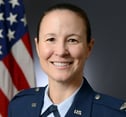
“Of the many professional programs I’ve been a part of, USJLP is the first that has truly brought together experts and leaders across all of society – from government, to business, to the arts, to science and technology, to non-profit, and more – to comprehensively address the most pressing shared issues. ... Being among such uniquely curated cohorts who all have a shared purpose, but not the same jobs, made it possible to quickly break down professional barriers and find answers through objective curiosity about fields that are not our own. In doing so, bonds became deep quickly, and I know now that I have a cohort and a program I can count on both professionally and personally.”
– Kira Coffey (USJLP 2026–2027), Colonel; Pilot, United States Air Force; Special Assistant to the Chairman of the Joint Chiefs of Staff, Office of the Chairman of the Joint Chiefs of Staff
 “USJLP gave me the opportunity to step outside the world I usually see and to reflect more deeply on who I am, where I come from, and what I want to carry forward. Through meaningful conversations with people from different backgrounds, I rediscovered a sense of pride in being Japanese and began to think more about how I can connect the past, present, and future. More than anything, USJLP reminded me of the importance of being honest with myself, listening deeply to others, and staying open to perspectives different from my own.”
– Takako Yamada (USJLP 2026–2027), Assistant Professor, Faculty of Environment and Information Studies, Keio University; Director of Regional Revitalization, Yugawara Town; CEO, WAKUWORK ENGLISH
 “USJLP is the most extensive and impactful network of people who are committed to maintaining the US-Japan relationship.”
– Jack McCain (USJLP 2026–2027), Chief Executive Officer, McCain Advisory KK; Board Member, McCain Institute
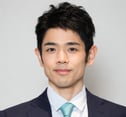
“USJLP placed me in sustained conversation with people whose expertise, values, and life experiences were very different from my own. It challenged me intellectually, but its deepest impact came when discussion became shared experience and a diverse group began to feel like a community. I left with a stronger desire not only to learn from remarkable people, but also to translate my own experiences into stories and ideas that can contribute to others.”
– Yoshio Seto (USJLP 2026–2027), Chief Executive Officer, FineToday China
 “Through USJLP, I've made friendships that will last for many, many years; better understood common challenges that face our two countries; and gotten the chance to understand Japan, a country that feels both far away and yet very close to the U.S. in terms of shared values. It's an extraordinary community, and I feel so privileged to be a part of it.”
– Sewell Chan (USJLP 2025–2026), Senior Fellow, Center on Communication Leadership and Policy, USC Annenberg School for Communication and Journalism
 “USJLP was one of the richest and most unforgettable weeks of my life. I met remarkable people who challenged my thinking, broadened my perspective, and inspired me in ways I never expected. I realized that no matter how much I have studied or how widely I thought I had explored the world, there is always so much more to discover.”
– Makoto Tsujiguchi (USJLP 2026–2027), Visiting Fellow; Japan Chair, Center for Strategic & International Studies (CSIS); Senior Fellow, Keidanren Policy Research Institute (KPRI), Keidanren
 “USJLP is a deeply meaningful experience that brings together brilliant minds from a wide range of cultures, professions, and lived experiences. I have not only gained a deeper understanding of Japan, but also formed strong connections with people whom I hope will remain part of my life for years to come. I am so excited to be part of this lifelong community!”
– Victoria Houed (USJLP 2026–2027), Former Managing Director, Recoding America Fund; Former Director of AI Policy and Strategy, U.S. Department of Commerce
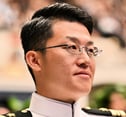 “USJLP is a place where people who genuinely care about the future come together—not simply to talk about leadership, but to take responsibility for it. ... We come from different generations, professions, and perspectives, yet we share a deep commitment to asking difficult questions, challenging one another, and finding a better path forward. ... I leave USJLP not only with new perspectives and lifelong friendships, but with a renewed sense of responsibility for the future of the U.S.-Japan relationship.”
– Takashi Matsunaga (USJLP 2026–2027), Commander, Japan Maritime Self-Defense Force; Deputy Director, Japan-U.S. Defense Cooperation Division, Defense Policy Bureau, Ministry of Defense


Related News
October 9, 2026
September 15, 2026
May 12, 2026